2023 - Trelawny's Tarot
My daughter and I have found Tarot cards and card reading fun and so I thought “What if Hermione had made notes from Trawlawney’s class on Tarot cards? After all, Tralawny was surprisingly accurate in Harry Potter and the Half-Blood Prince.1 What would that look like?”
In the box is a letter from Hermione…
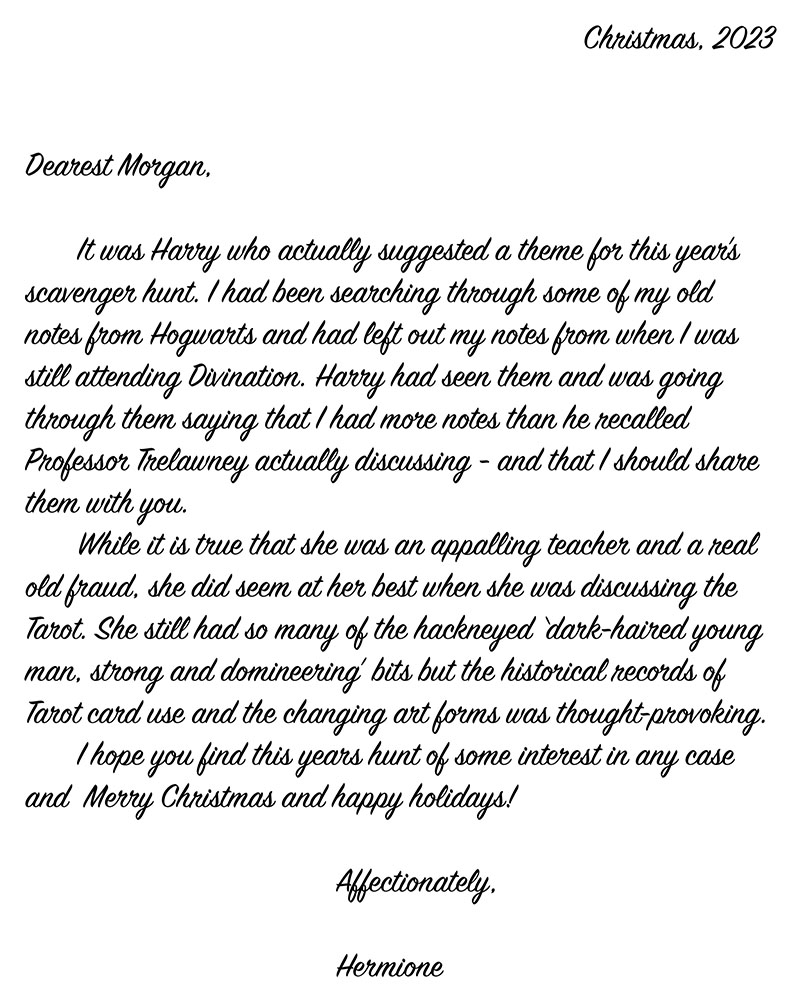
The letter reads…
It was Harry who actually suggested a theme for this year’s scavenger hunt. I had been searching through some of my old notes from Hogwarts and had left out my notes from when I was still attending Divination. Harry had seen them and was going through them saying that I had more notes than he recalled Professor Trelawney actually discussing - and that I should share them with you.
While it is true that she was an appalling teacher and a real old fraud, she did seem at her best when she was discussing the Tarot. She still had so many of the hackneyed ‘dark-haired young man, strong and domineering’ bits but the historical records of Tarot card use and the changing art forms was thought-provoking.
I hope you find this years hunt of some interest in any case and Merry Christmas and happy holidays!
Affectionately,
Hermione
Also in the box was page one of Hermione’s notes…
Notes on the Major Arcana in Waite-Smith
0. The Fool
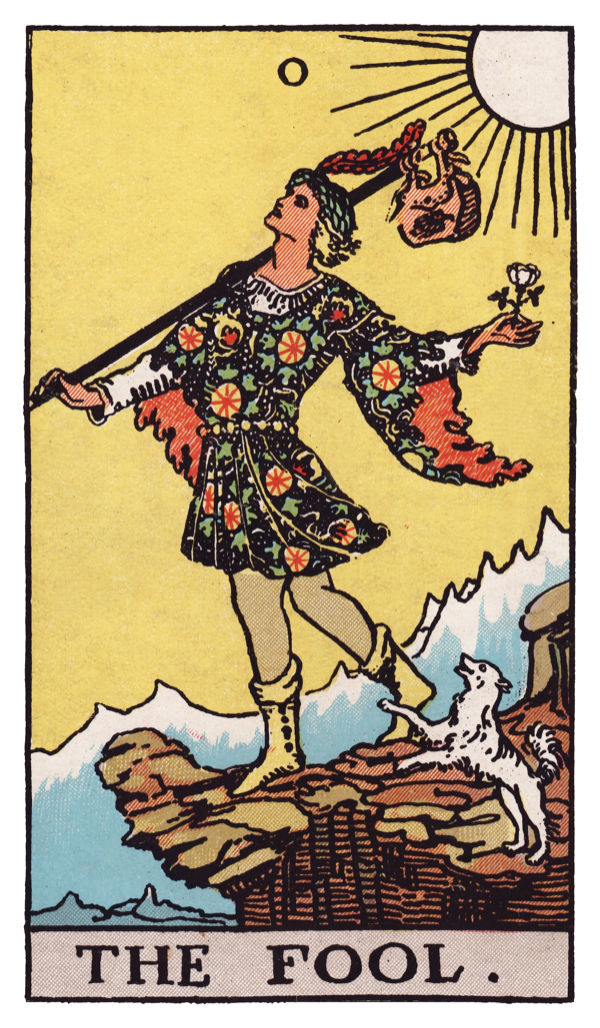
“Everyone starts at the beginning…”
— Rubeus Hagrid, Harry Potter and the Philosopher’s Stone
The fool is our hero at the start of their journey. A white rose in one hand, a bindle stick in the other, no home and few cares. The fool is how we all begin, whether we are Harry Potter, just arriving at Hogwarts, or any other would-be hero in a story.
In early Tarot versions, the fool is a beggar or vagabond, and the white dog is a bear or wolf attacking them. In Waite-Smith, our fool is young and innocent. A white dog is a companion, whether warning them of their danger or enjoying the day is up to interpretation. In western comic tradition, having the character face to the left indicates the character is going “backwards” in the plot, but the Hermetic Tarot references compass directions, and so our fool faces North West - symbolic of the unknown.
TIP
To take your next step on your journey:
can you find someone’s boon companion?
This was intended to be an easy clue to get things started, there are two references to Harry as our Fool, and Harry’s boon companion is Hedwig…
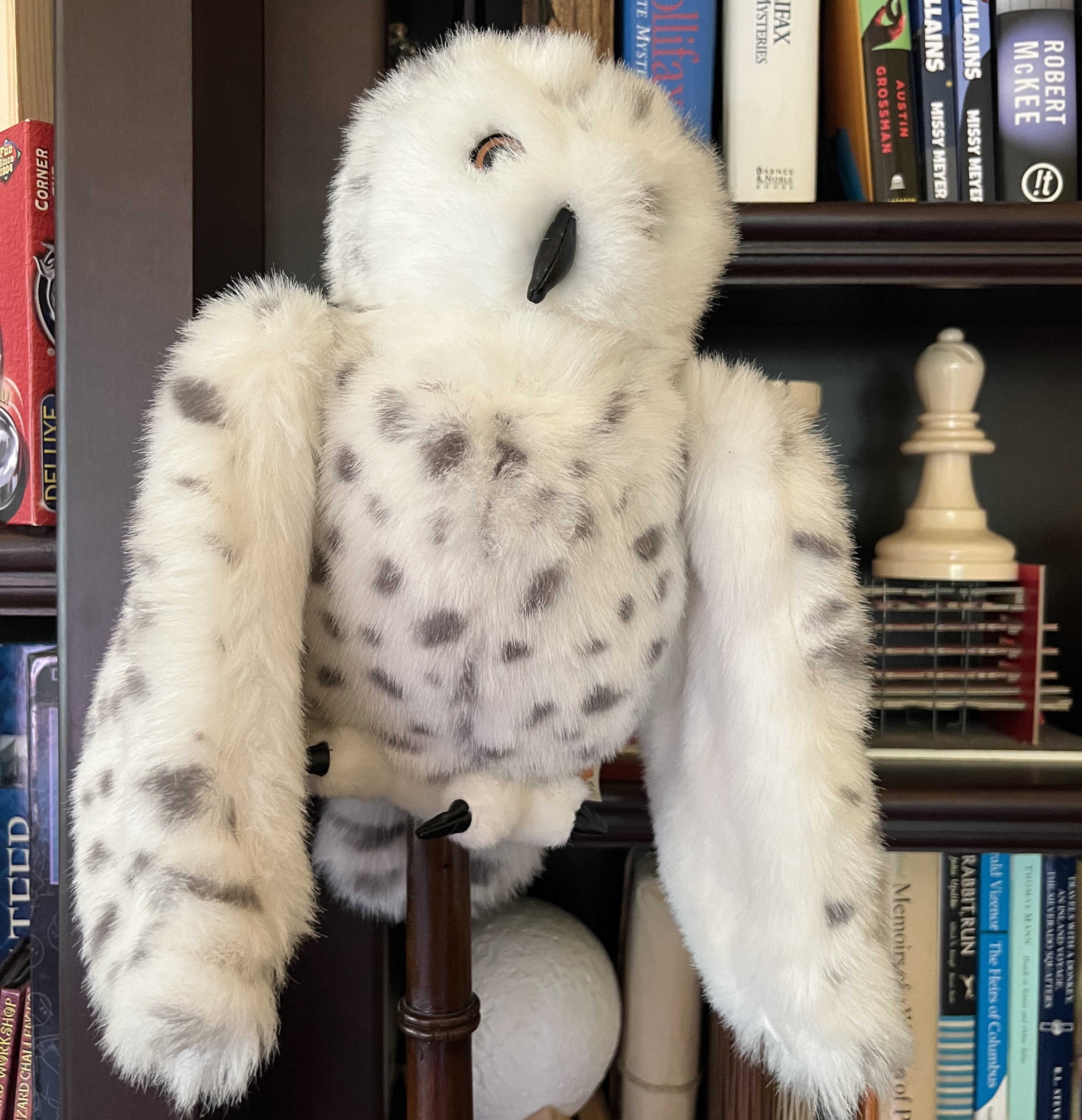
Inside Hedwig was the second page of notes. Wrapped in the note was an actual Tarot card. The one you just read about—but with Harry Potter as the Fool.
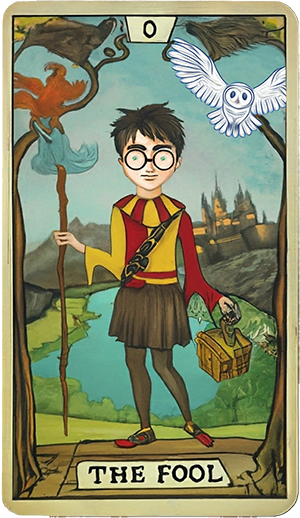
At the bottom of the card, a tiny strip of paper had been taped, with half of the text cut off.
The second page of the notes covered the next two cards in the Major Arcana, the Magician and the High Priestess…
1. The Magician
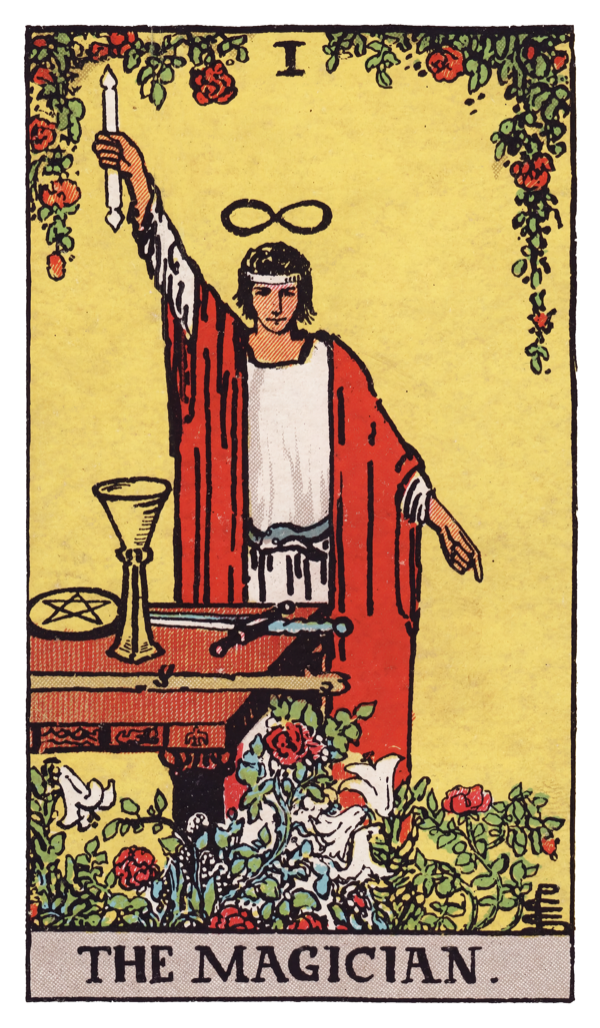
“The greatest wizard in the world is Albus Dumbledore.”
— Harry Potter, Harry Potter and the Chamber of Secrets
“As above, so below” — this is the gesture Waite-Smith has our magician in. Outdoors and open to all. The roses and lilies at his feet match his outer red robe and inner white garment. The red roses stand for passion and desire, the lilies purity of thought. Together, they symbolize balance—we will also see these on the Two of Wands with a similar message. On his table are all the suits of the deck, symbolizing his mastery over all elements. Finally, we have two symbols of eternity, the lemniscate or infinity symbol over his head like a halo, and an ouroboros for a belt.
Hajo Banzhaf, in Tarot and the Journey of the Hero, considers the Magician and the High Priestess as the Heavenly, or Spiritual, parents and the Empress and the Emperor as the Earthly or Physical parents. But to me a more compelling interpretation is that the magician and the high priestess are are their inner id—the people the fool looks up to and wishes to emulate.
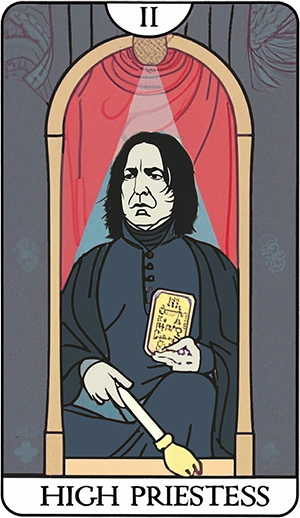
2. The High Priestess
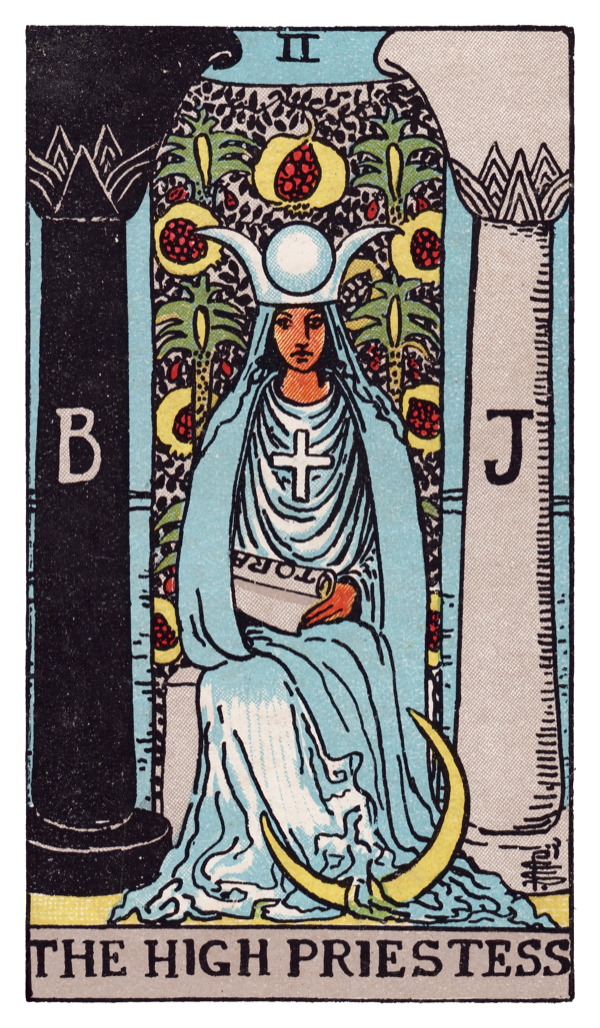
“As there is little foolish wand-waving here, many of you will hardly believe this is magic.”
— Severus Snape, Harry Potter and the Philosopher’s Stone, Ch 8
The High Priestess is the other side of the coin to the Magician. Where the magician acts out in the open for all to see, the High Priestess is the keeper of secret knowledge and her reign is of the mind and spirit. The veil behind her is decorated with pomegranates and palms, symbols of both death and eternal life. The book of law she holds is half hidden behind her cloak, the lunar crest at her feet, further demonstrations that while some knowledge is spoken, other must be inferred.
TIP
For your next step on your journey:
can you find a secret, magical book—a hard to reach book…?
There are a number of books in this house that could be considered secret, magical, and hard to reach. You finally find the next set of notes in a box that mimics the book, Harry Potter and the Deathly Hallows…
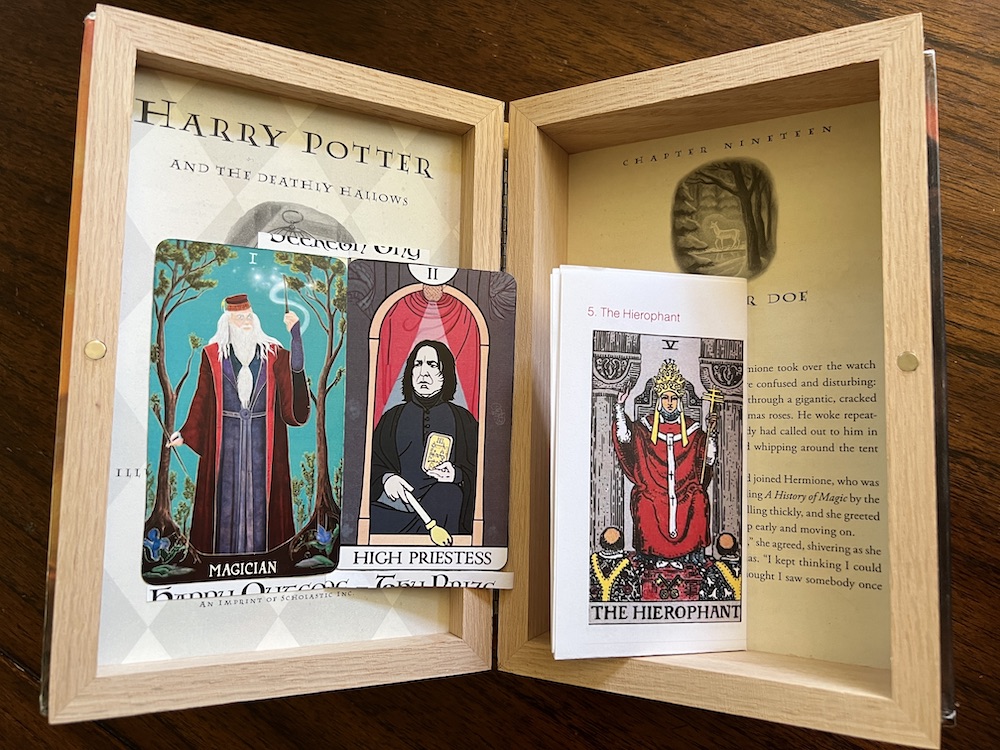
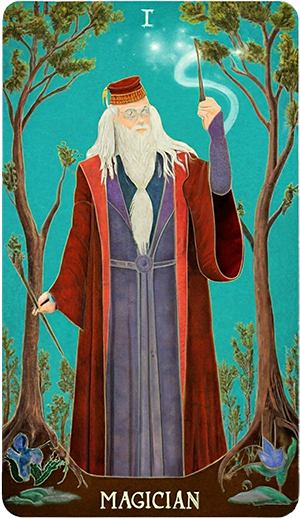
As before, wrapped in the notes are two more Harry Potter themed Tarot cards, Dumbledore as the Magician and Snape as the High Priestess. As with the fool, affixed to the top and bottom of the two were slips of paper, with the bottom and top part of some text.
The next page of the notes were for three cards this time…
3. The Empress
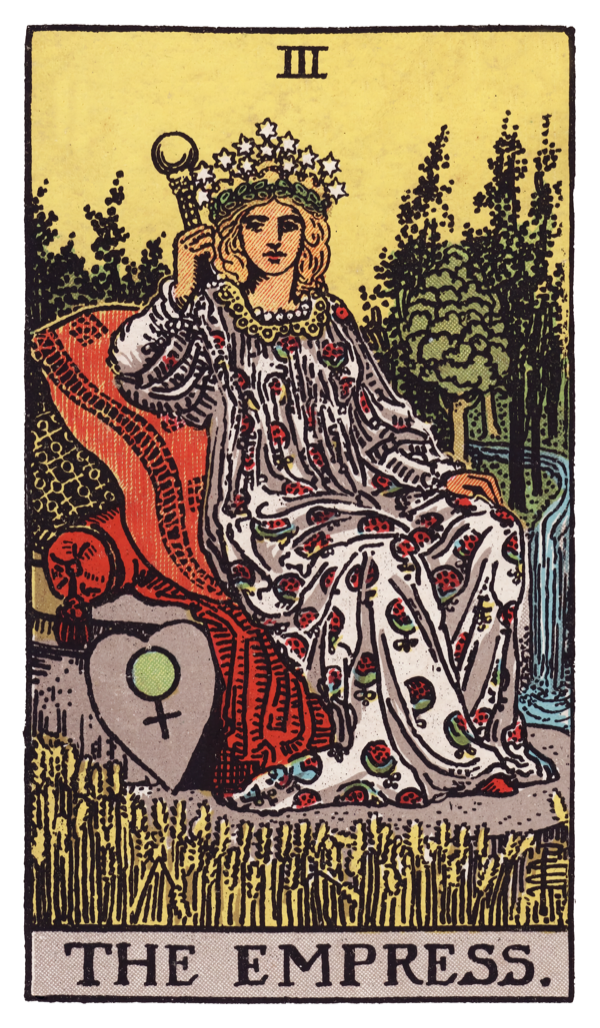
“She had a way of seeing the beauty in others…”
— Remus Lupin, Harry Potter and the Prisoner of Azkaban
Historically, the Empress, aside from being seen as the ultimate mother-figure, is portrayed as the pragmatic problem solver, but she is also someone who acts with compassion. In Waite-Smith’s tarot, the shield with an eagle, symbolizing royalty, has become a heart, embossed with the symbol for Venus. They also place her outdoors, in front of a field of ripening wheat, with red pomegranates on her vestments. The Empress is maternal and life-giving, but it would be wise to recall her background of social and political power.
4. The Emperor
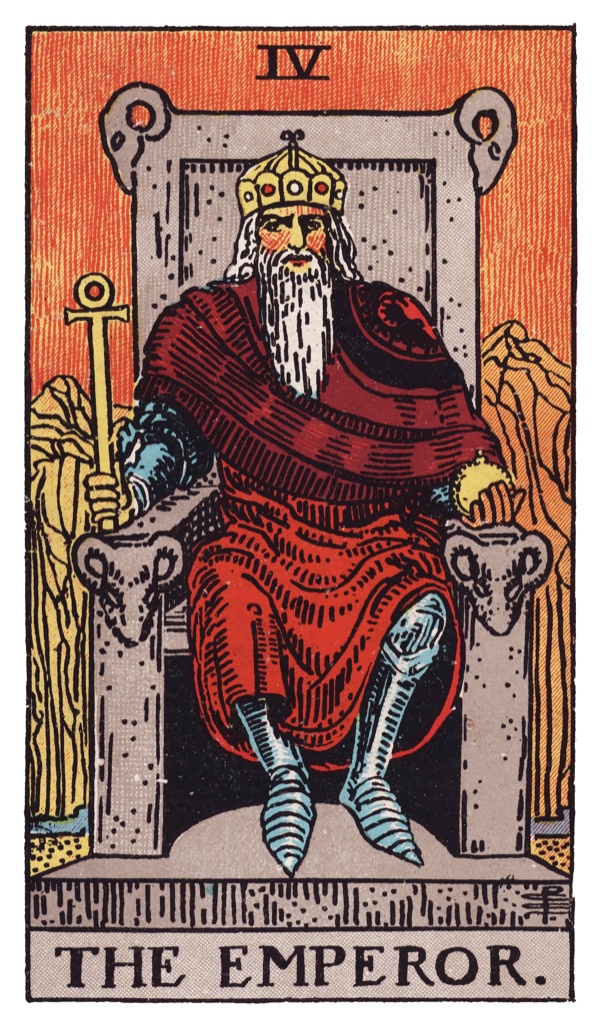
“Yeh did as much as yer father would’ve done, an’ I can’ give yeh no higher praise than that.”
— Rubeus Hagrid, Harry Potter and the Goblet of Fire, Ch 37
“The emperor tarot card has become a receptacle for our modern notions about masculinity and patriarchal authority.” 2 At the time of the Tarot’s invention, there were two combatting patriarchies: the Emperor was engaged in an ongoing power struggle with the Pope, or the Hierophant.
The red robes symbolize the creative fire. The orb in his left hand, his royal authority. The throne, willpower over the material world. Thus, the Emperor represents the best of father figures, but our fool must decide which attributes are useful and which are merely baggage from the past.
5. The Hierophant
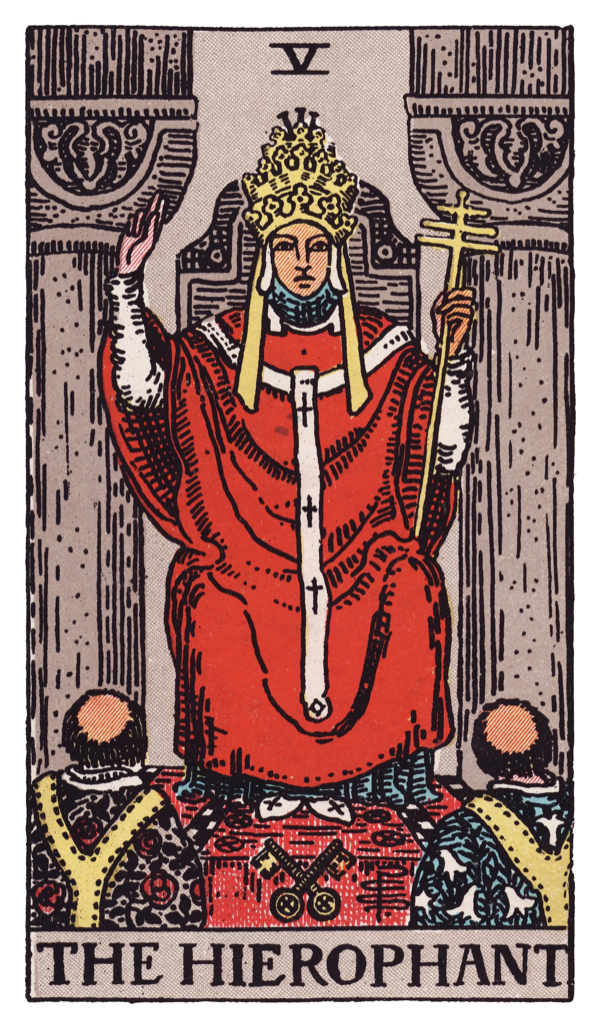
“I will have order!.”
— Dolores Umbridge, Harry Potter and the Order of the Phoenix
“Obedience and tradition.”3 “The Hierophant represents traditional, orthodox teaching considered suitable to the masses.”4 The Hierophant represents social approval, the need to conform, the importance of ritual and the outer forms of religion.
At the time of the creation of the Tarot, the Holy Roman Emperor and the three popes of the catholic church were at odds, both spiritually and physically. It is worth noting that the Hierophant has two acolytes kneeling before them; characteristically, the Hierophant has no shortage of followers.
Our hero is now ready to leave adolescence behind…
TIP
For your next step on your journey:
can you find the power behind the Emperor’s throne?
This clue is a toughie. To solve this, you need to figure out that the chair in my office (I’m the father figure here), has a secret compartment…
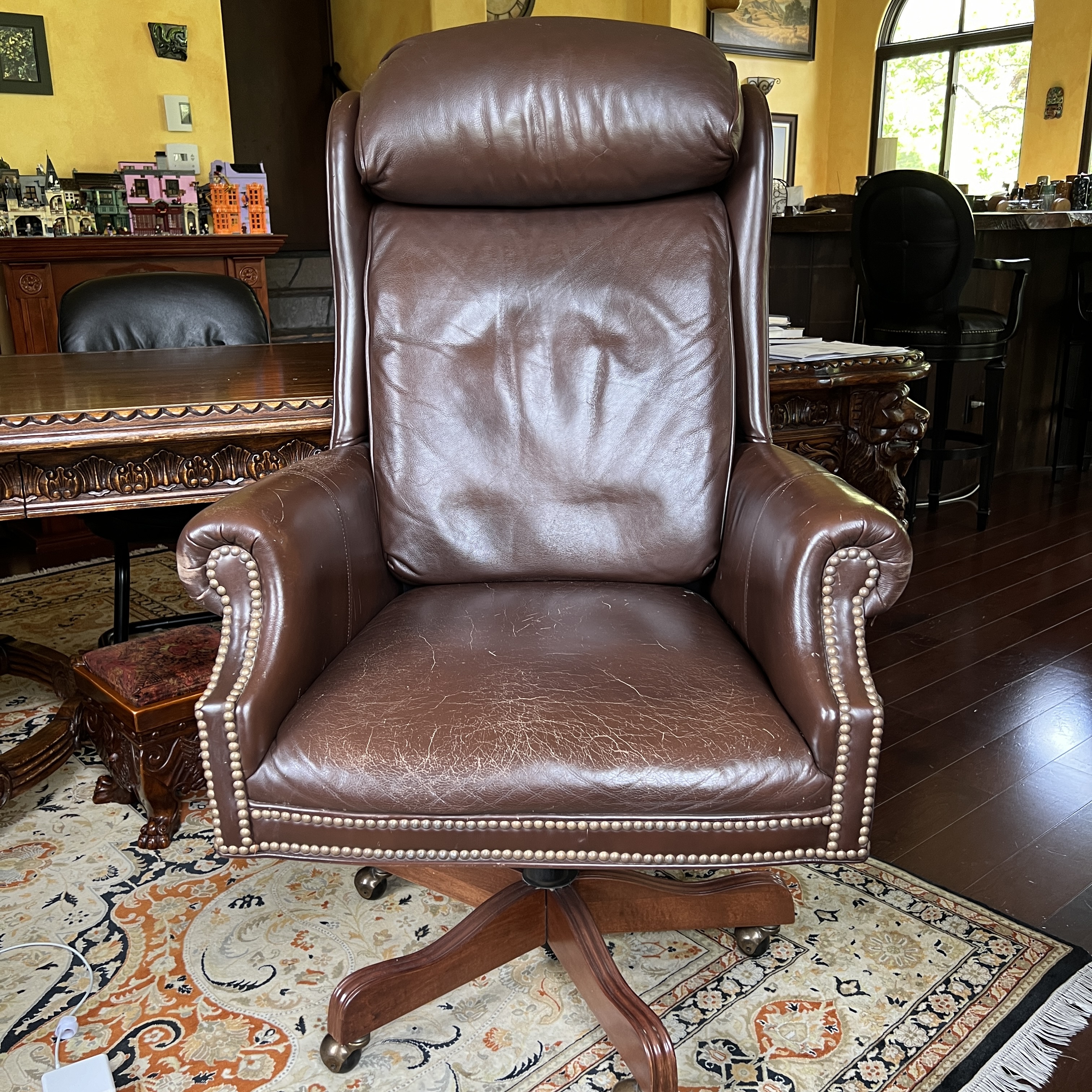
Behind the cushion was the next set of notes and next three Harry Potter Tarot cards…
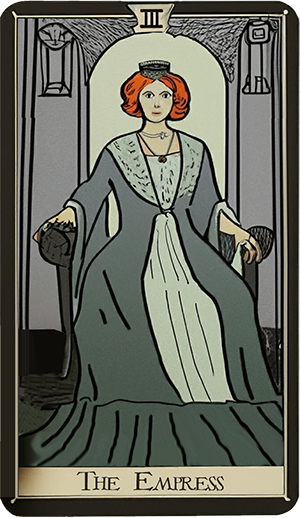
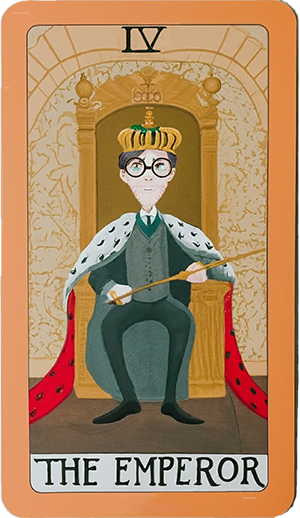
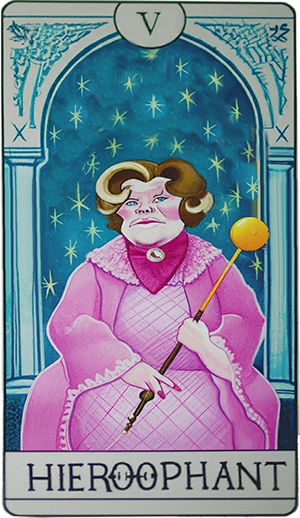
The next page of notes were for four cards this time…
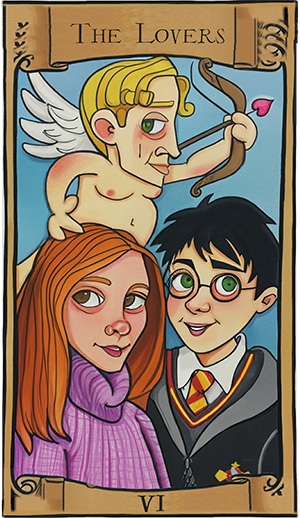
6. The Lovers
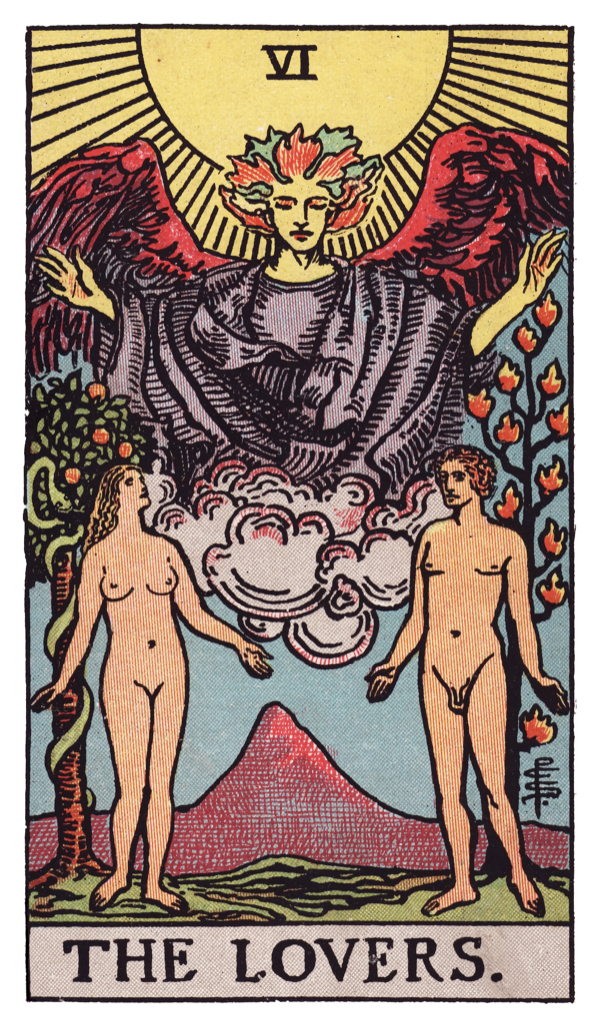
“I can smell freshly mown grass and new parchment and—”
— Hermione Granger, Harry Potter and the Half-Blood Prince
As with many cards in the Tarot, there is a simple face-value representation to this card, but also a more nuanced meaning. In a deeper sense, The Lovers is a card about forming relationships, it is also about change and difficult choices as love is a driving force. In many ways, this card is the first call to adventure.
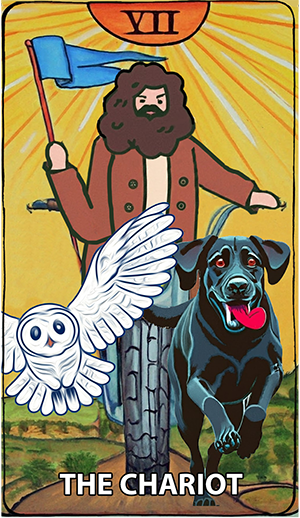
7. The Chariot
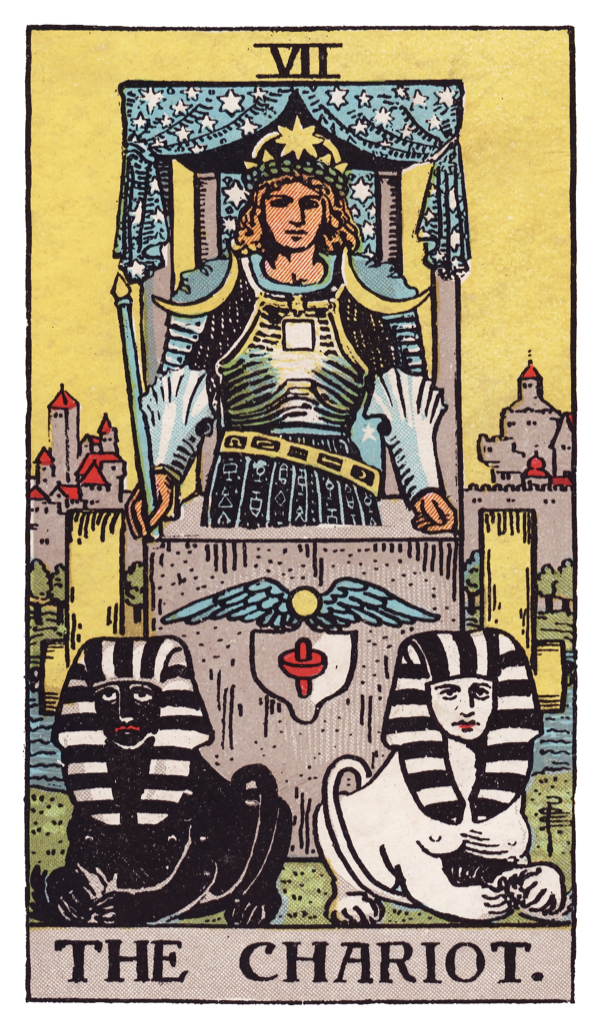
“If yeh know where to go…”
— Rubeus Hagrid, Harry Potter and the Philosopher’s Stone, Ch 5
Representing both the ability of movement as well as the desire, one of the frequent call outs of this card is the two sphinxes facing in somewhat opposite directions and in different colors. In the Marseille deck, the horses are also in opposing directions and blue and red. Hagrid’s comment to Harry therefore is an important one – movement needs guidance and control.
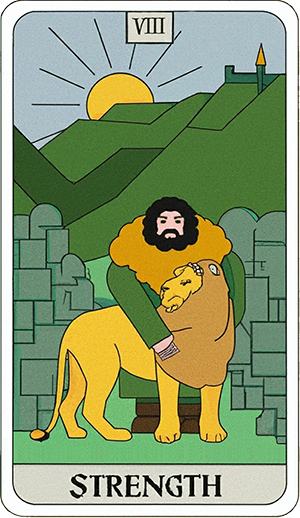
8. Strength
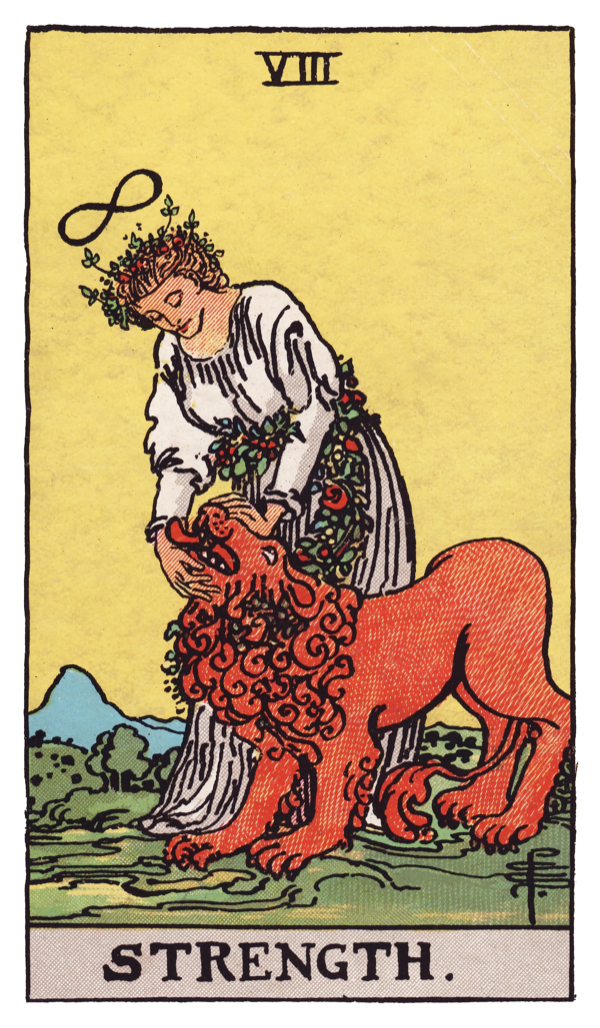
“The trick with any beast is ter know how to calm ‘em.”
— Rubeus Hagrid, Harry Potter and the Sorcerer’s Stone
Strength is clearly needed, but it is notable that the art for Waite-Smith is a female figure, her hands lightly on the lion’s head. A garland of flowers adorn her hair and she has a chain of roses as well. The lemniscate, the same as that over the magician’s head, symbolizes life. The lion may represent a force of nature but also may represent an internal struggle with one’s own inner animalistic desires. In either case, the card demonstrates that the path forward is via empathy and understanding, not brute force
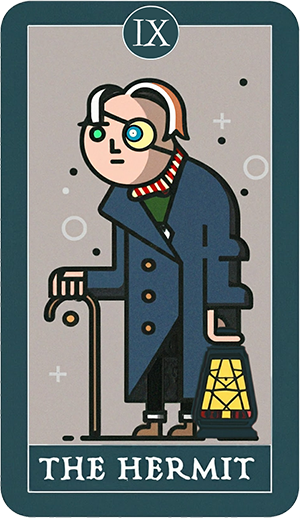
9. The Hermit
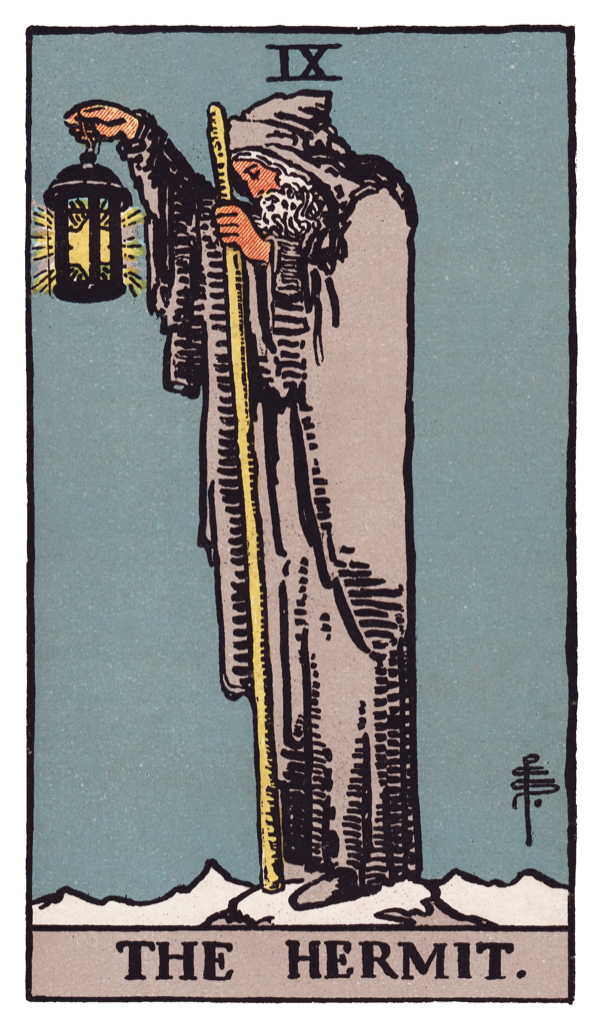
“Constant, ceaseless vigilance!”
— Alastor Moody, Harry Potter and the Goblet of Fire
A counter in many ways to the Lovers, this is a card about introspection, inward reflection, and the light that can bring. While friends and family can help guide you on your way, some searches and some answers must come from within.
Relationships, mobility, empathy and introspection. Our hero is now ready to answer for themselves which direction they wish to take on their journey…
TIP
For your next step on your journey:
can you find a ‘large beast’ who, with a firm but respectful hand, will bow to you?
This one was pretty quick, I think she went right to her old Dragon rocker…
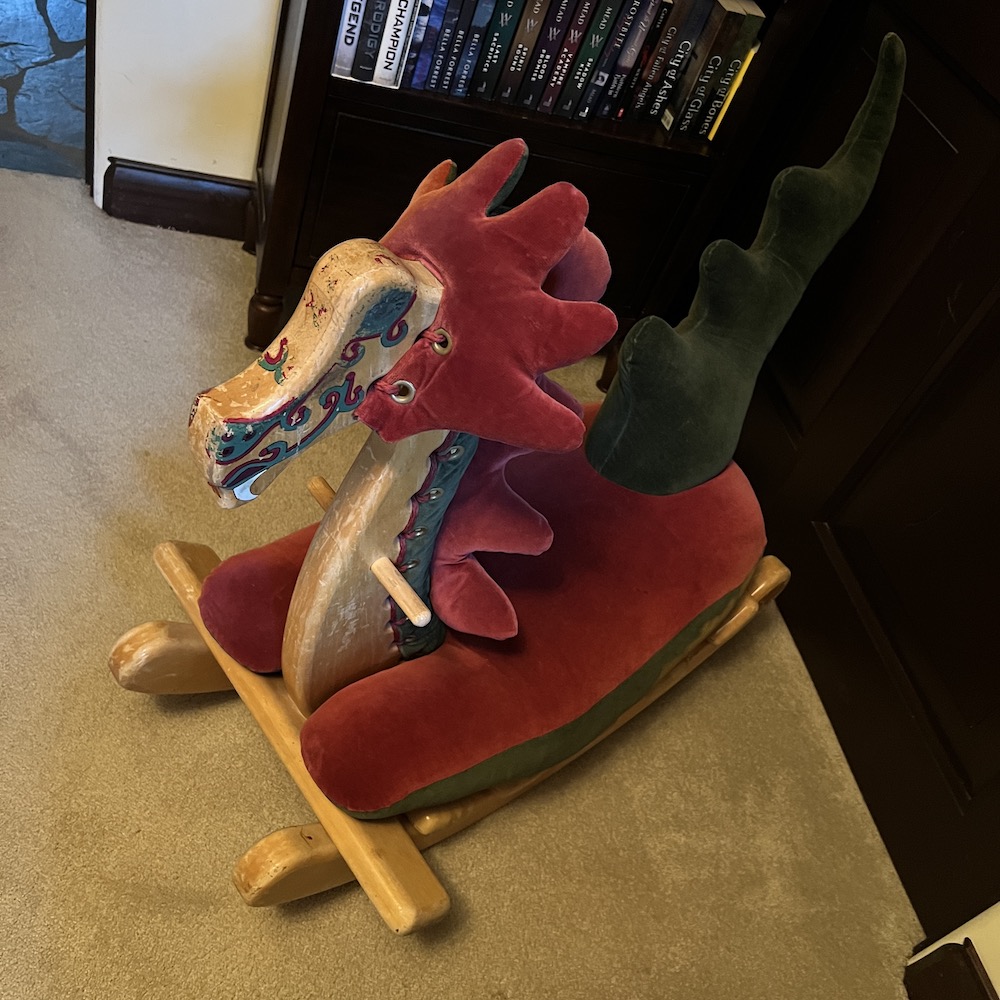
Underneath the seat was the next set of notes with the prior four Tarot cards with characters from Harry Potter.
Harry & Ginny (and Professor Lockhart as Cupid), Sirius’s Motorcycle (ridden by Hagrid with Sirius and Hedwig as the sphinxes), Hagrid himself as Strength and Mad-Eye Moody as the Hermit…
The next set of notes were for the three cards…
10. Wheel of Fortune
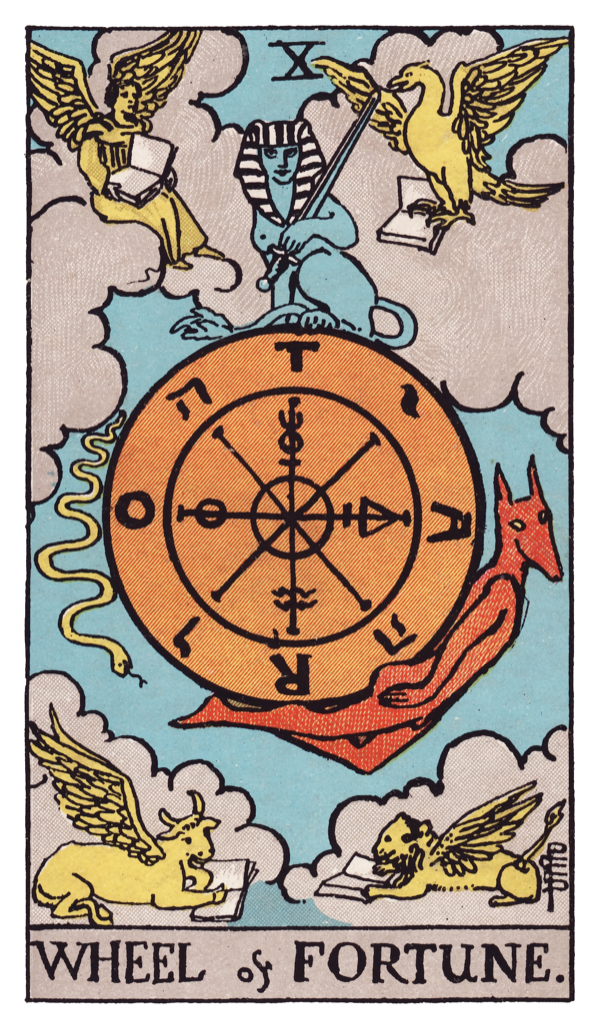
“Let us step out into the night and pursue that flighty temptress, adventure.”
— Albus Dumbledore, Harry Potter and the Half-Blood Prince, Ch 3.
A reminder that, regardless of what decisions we make, or our preparedness, adventure and a change of fortune comes for us all. I also think of Fred’s comment “I’ve always felt our futures lay outside the world of academic achievement.” For some, an uncertain life is the only life. In either case, our fool must be prepared for some ups, and some downs.
11. Justice
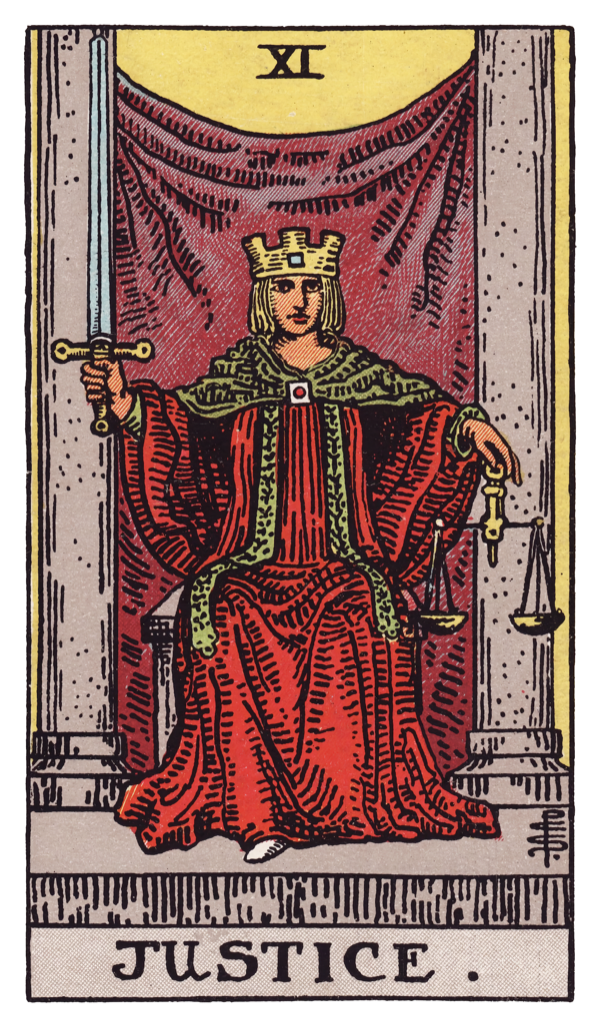
“For the Greater Good.”
— Albus Dumbledore, Harry Potter and the Deathly Hallows, Ch 18.
I think the Justice card has many parallels to the Hierophant. Both cards espouse what is clearly a positive value and outcome, but both are also the representation of those values as seen by those currently in charge. It is, in short, the justice of law. While it is a commendable pursuit, its practitioners should aspire to do more than, as Cornelius Fudge said once “Got to be seen to be doing something.”
12. The Hanged Man
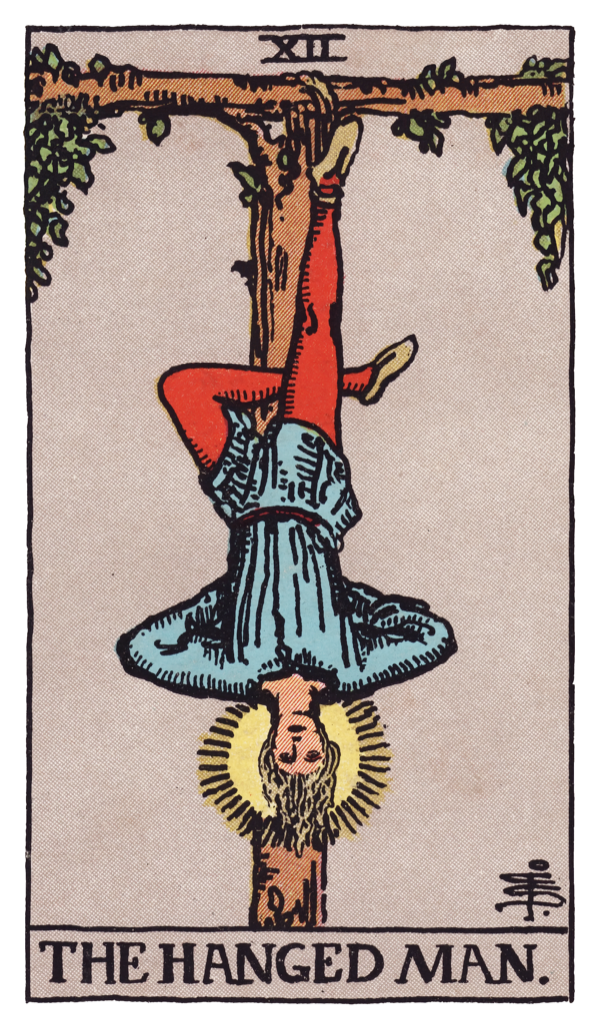
“Undesirable No. 1”
— Ministry of Magic, Harry Potter and the Deathly Hallows, Ch 13.
The Hanged Man is a card that has had many changes from its original meaning, although the artwork is largely unchanged. In the Renaissance Italy, when the original tarot was created, if an individual could not be brought in to stand for their crimes, the governing authorities would commission an Pittura Infamante to be painted in a public location, as a way of hanging the subject in effigy. And so in original Tarot readings, the hanged man represented traitors and traitorous behavior. But “blood traitor is next to Mudblood in my book” – clearly one person’s act of treason is another’s act of defiance. Waite-Smith and others that followed them consider the Hanged Man a sign of repudiating their own self-desires.
Our Fool has chosen their path and gone a good ways down it. The remaining cards are now more about outcomes than specific personal growth.
TIP
For your next step on your journey:
The scales have been a long-standing symbol of Justice. Can you find a substitute in this house?
Doubtless the toughest clue of the bunch. I guess I do more cooking than others as I thought the kitchen scales were obvious. In any case, in the drawer next to the scales you find the next set of notes and the three new Harry Potter versions of the prior three Tarot cards…
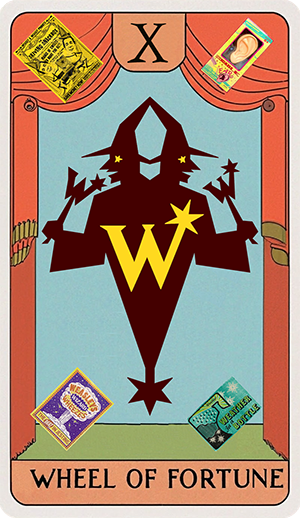
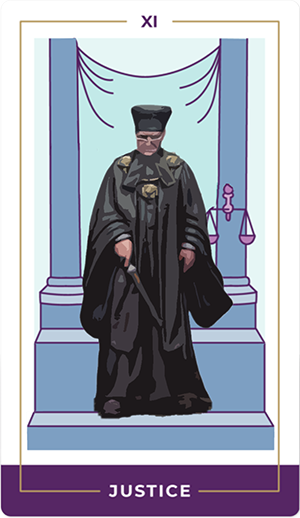
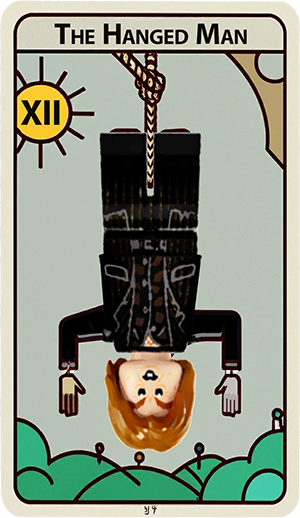
The next set of the notes were for four of the more well known Tarot cards…
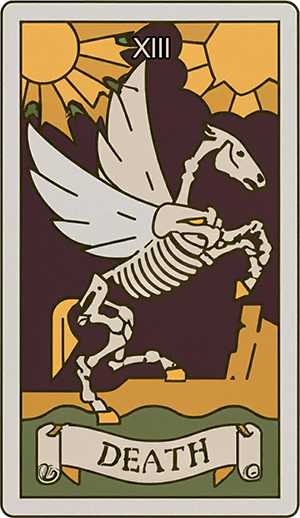
13. Death
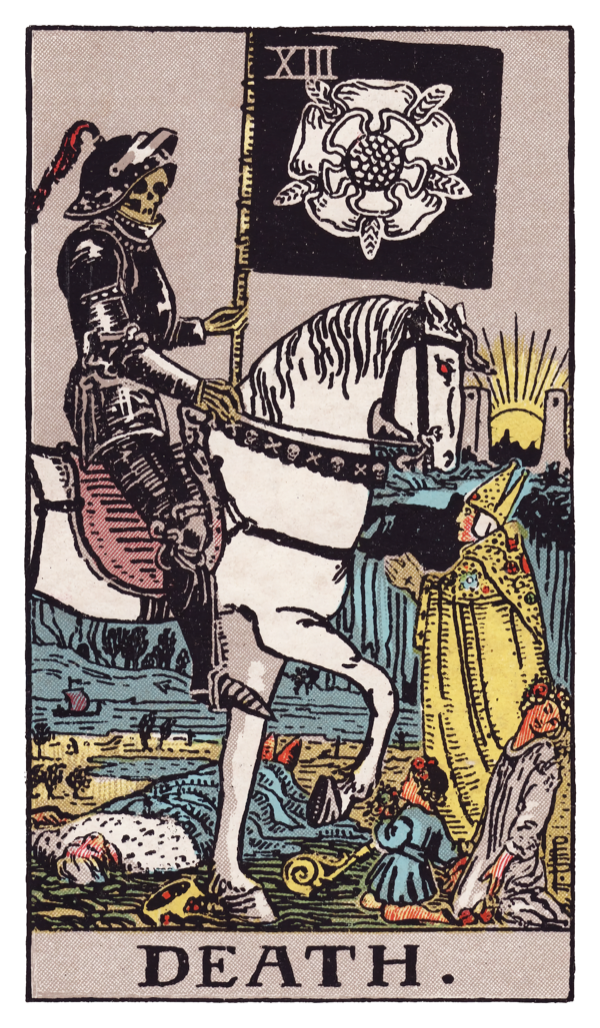
“To the well-organised mind, death is but the next great adventure.”
— Albus Dumbledore, Harry Potter and the Philosopher’s Stone, Ch 17.
A reminder that all things end. Whether that be one’s studies at school, a job, or even life itself. But endings are simultaneous with beginnings. Ahead of Death is a rising sun.
The white rose on the flag is traditionally a symbol of light, innocence and rebirth. (Also a symbol for the Rosy Cross, a symbol of the Rosicrucians and the Philosopher’s stone.) In front of Death, a rising sun between two towers sheds light on the city below.
14. Temperance
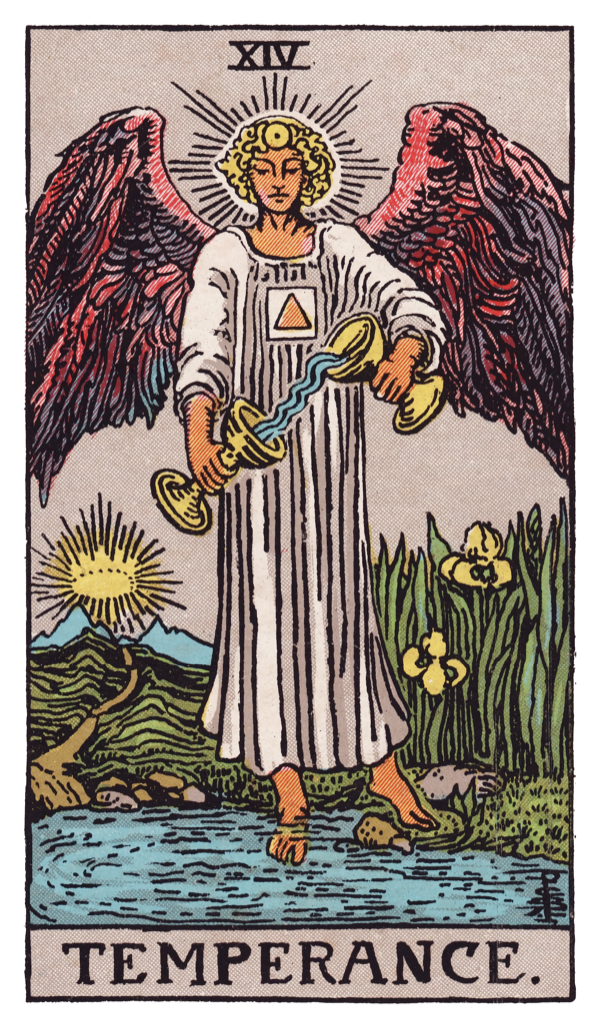
“He could not remember, ever before, choosing not to act.”
— Harry Potter, Harry Potter and the Deathly Hallows, Ch 25.
The figure at the bottom right of Death is now the central figure as an angel.
The angel itself shows the divine nature of moderation. Numerous symbols of balance are visible–the triangle inside the square, one foot in the water with one foot on the land.
This card, aside from the face-value, is a reminder of the importance of moderation, of restraint.
15. The Devil
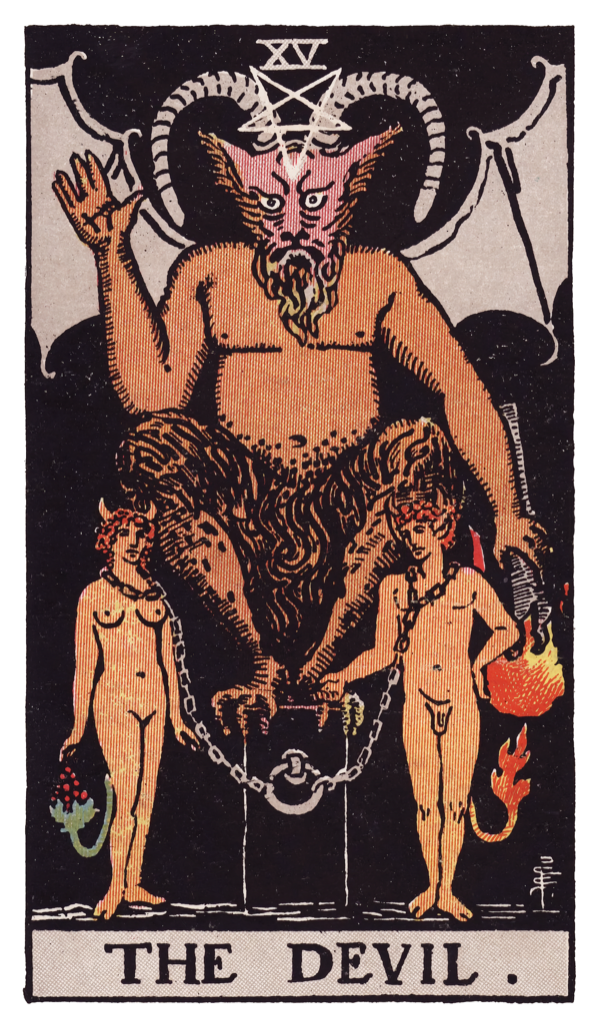
“It is probably the most dangerous and powerful potion in this room…”
— Horace Slughorn, Harry Potter and the Half-Blood Prince, Ch 9.
The Devil is less about a supernatural evil, but more the opposite figure of the card preceding it, Temperance. Giving in to our own animal nature, letting our desires choose our path. One key piece of symbolism is that the chains holding our two human figures are loose – they can leave if they choose.
16. The Tower
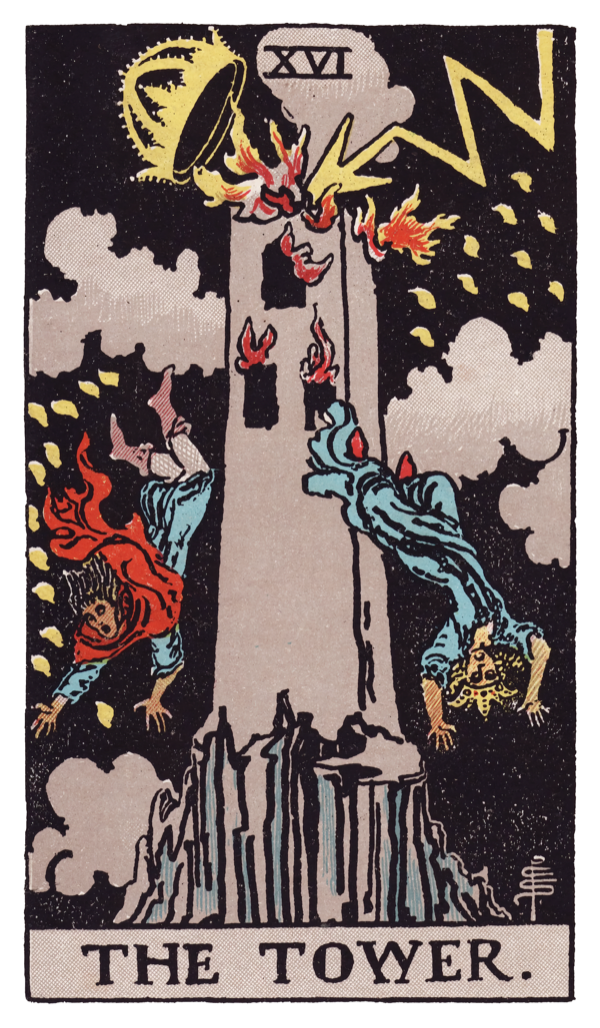
“Again and again, no matter how I lay them out - the Lightning-Struck Tower. Calamity. Disaster. Coming nearer all the time…”
— Sybill Trelawney, Harry Potter and the Half-Blood Prince, Ch 25.
Like death, the tower represents something we inherently fear and loath, yet cannot move forward without: sudden, sometimes catastrophic change. It may be the loss of someone or something one has come to depend on, it may be a crisis of faith our hero experiences internally. But frequently, it is only after a severe shakeup that a revelation and breakthrough can occur.
The first twelve cards were about personal growth, the preceding four were about their experiences in the world at large, the remaining five leave the physical world our hero has been living in…
TIP
For your next step on your journey:
can you find a tower that Trelawney might have been referencing?
This was an easy one - going right to the cardboard Hogwarts model on top of my coke machine, you find four more tarot cards wrapped in the next set of notes…
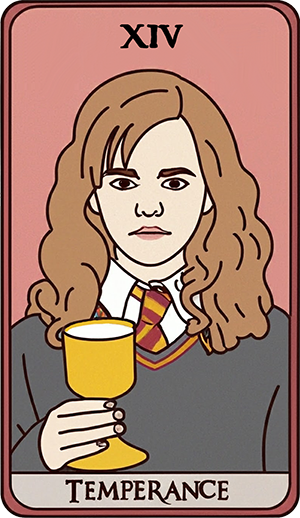
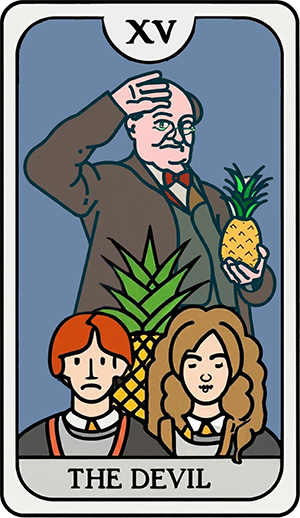
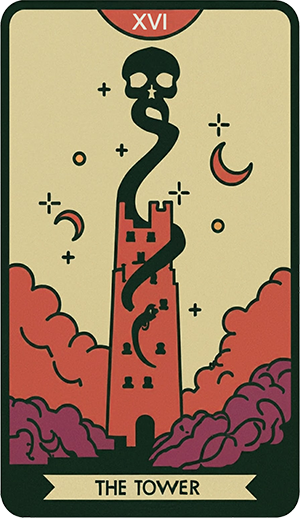
The next set of the notes were for the three celestial cards…
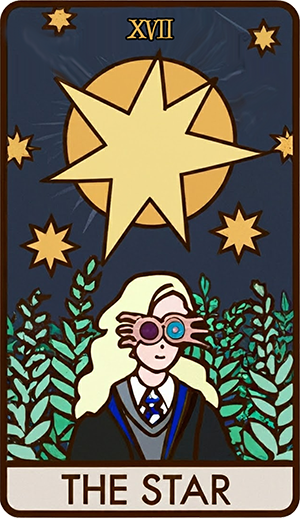
17. The Star
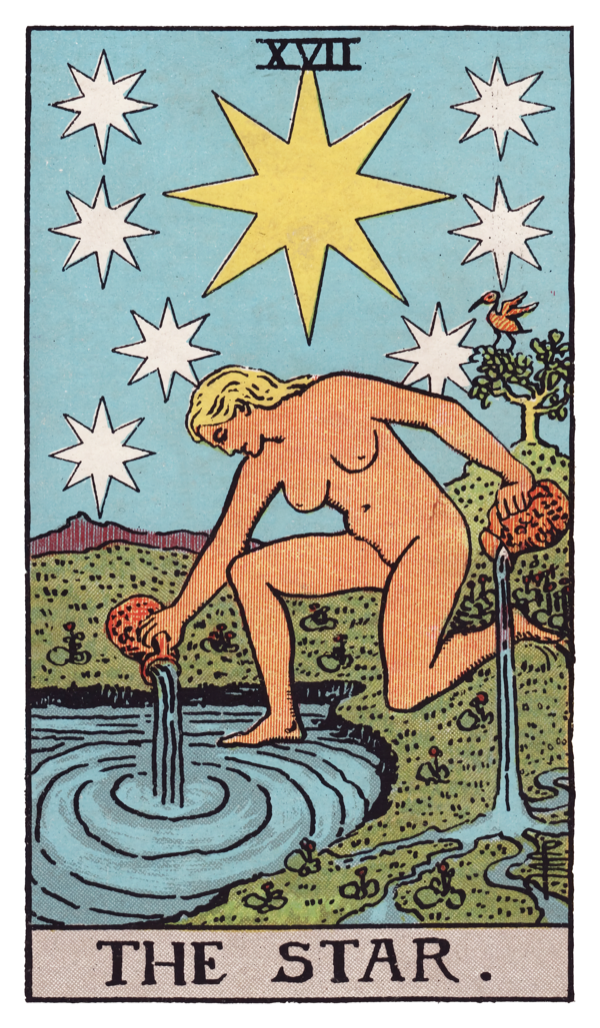
“Harry Potter! You listen to me right now!”
— Luna Lovegood, Harry Potter and the Deathly Hallows.
The essential artwork for the Star is largely unchanged from the early Marseille deck, a young maiden kneels with one knee on the land and one foot in the water. She pours out water on both. In the background, a bird rests in a tree.
The stars have been used as a navigation aid in earliest known history. Seeing stars have been a sign of hope as you are no longer lost. But you do have to listen.
18. The Moon
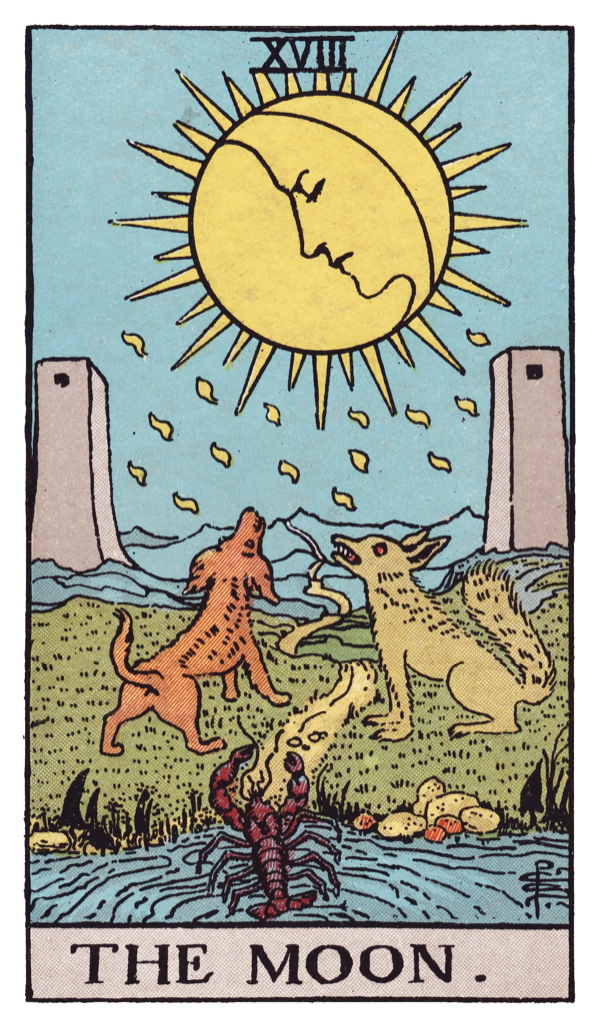
“It does not do to dwell on dreams and forget to live.”
— Albus Dumbledore, Harry Potter and the Philosopher’s Stone, Ch 12.
The moon, while it does illuminate the night, changes our perceptions and creates an otherworldly perspective that can confuse and even trap our hero. It has been associated with fear, illusions, as well as imagination. While “in dreams, we enter a world that is entirely our own” this card is also a reminder to wake up, and live our lives with our eyes open.
19. The Sun
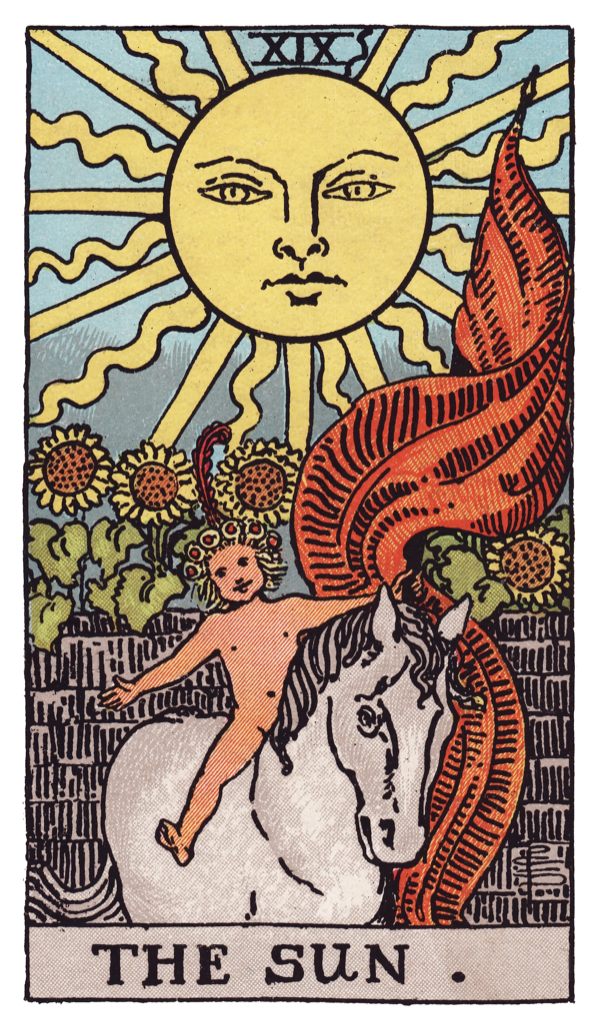
“Happiness can be found, even in the darkest of times, if one only remembers to turn on the light.”
— Albus Dumbledore, Harry Potter and the Prisoner of Azkaban.
One of the happiest cards in the deck, the sun represents victory, the happy outcome, success at last. The main challenge is to readjust to this new phase of their life. And of course, a reminder that frequently in life as well as in movies, there is a last challenge, even after all seems complete.
TIP
For your next step on your journey:
can you find the Sun and the Moon together?
Harder to find than I would have thought, especially as she painted it…
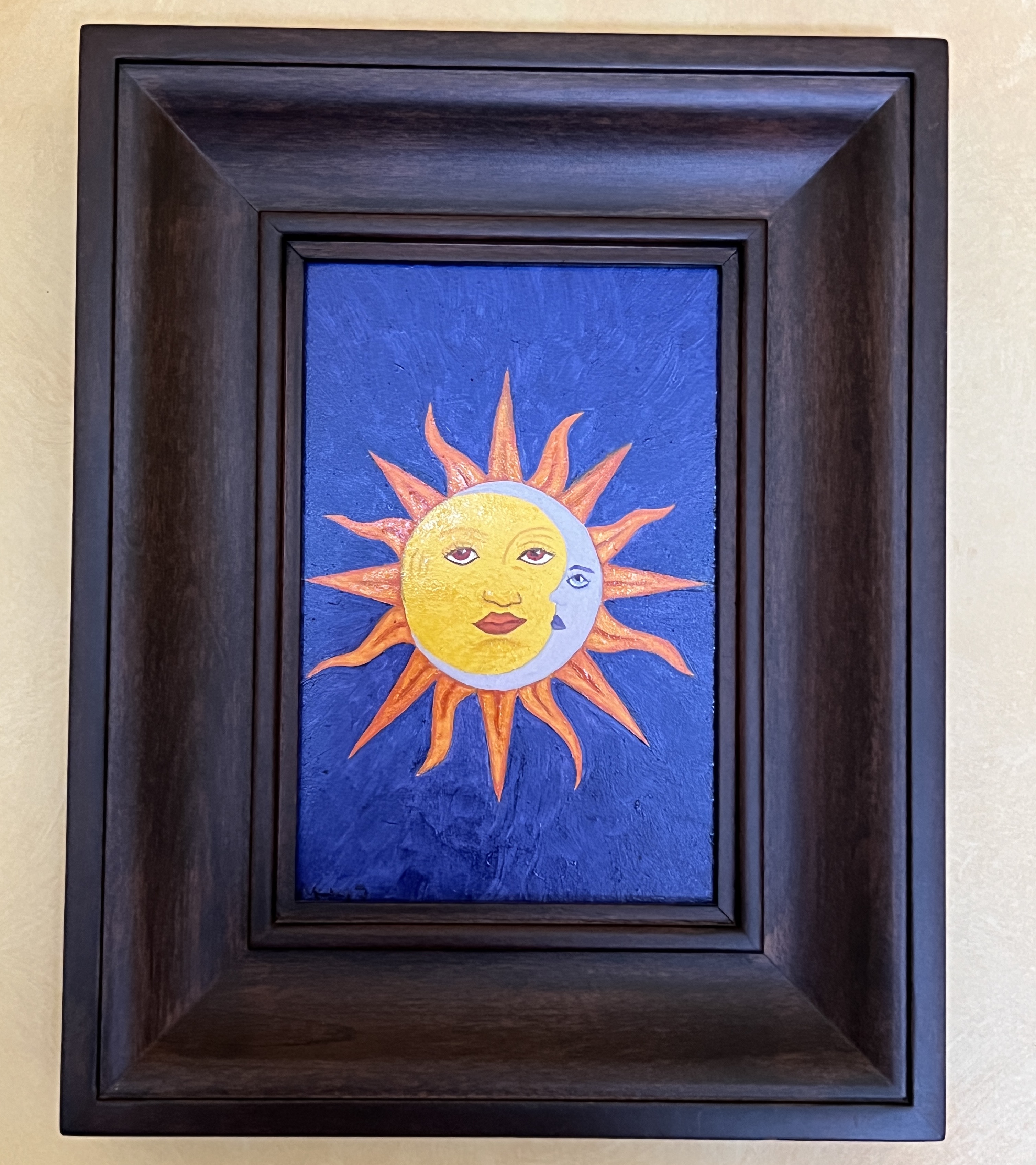
Behind the painting were the next page of the notes for the final two cards and the Harry Potter versions of the Star, Moon and Sun…
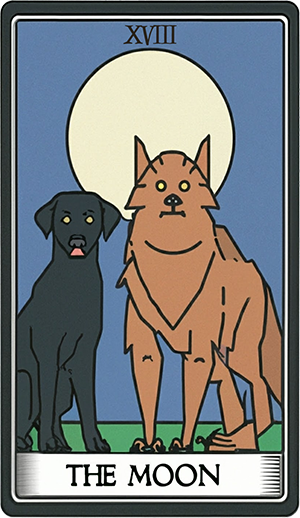
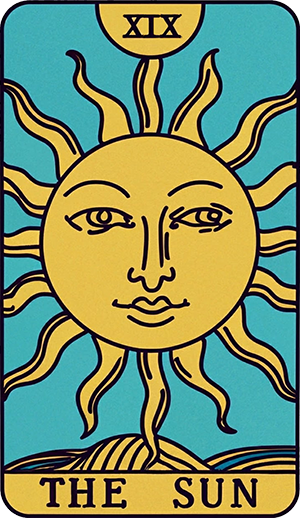
The last page of notes on the Major Arcana were…
20. Judgement
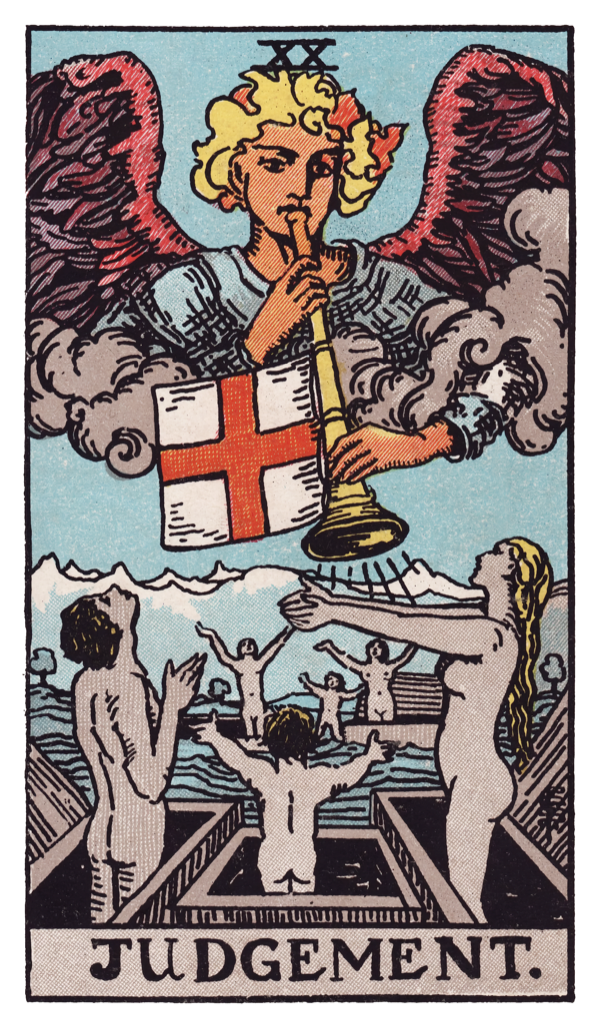
“I want to see some punishment!”
— Argus Filch, Harry Potter and the Chamber of Secrets, Ch 9.
For most individuals living at the time of the creation of the Tarot, the Judgement was a welcome moment, a rebirth, for themselves and their loved ones. Only those who had led a false life had anything to fear.
21. The World
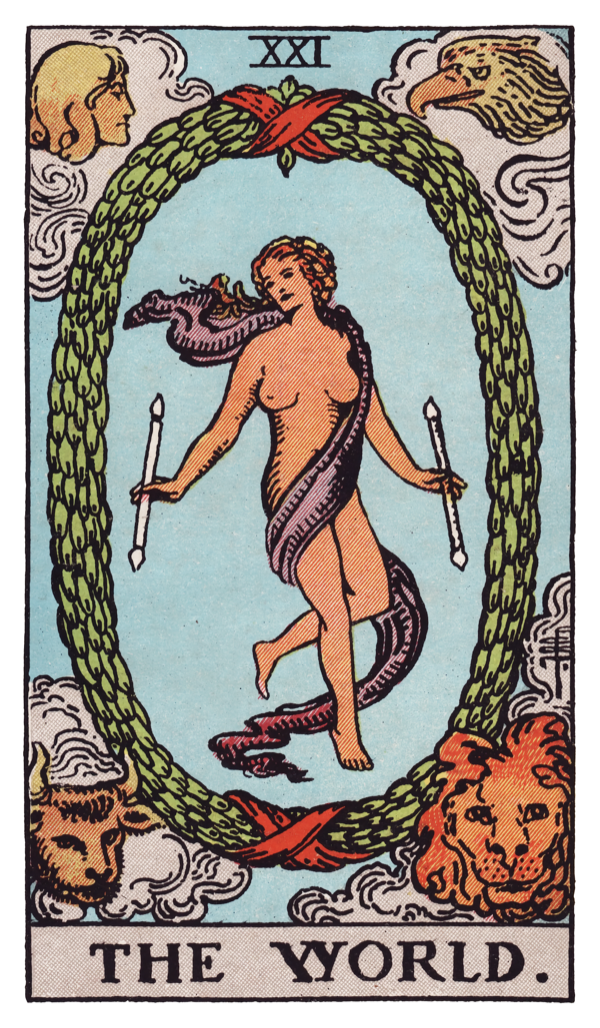
“…it matters not what someone is born, but what they grow to be!”
— Albus Dumbledore, Harry Potter and the Goblet of Fire, Ch 36.
The final card of the trumps or Major Arcana of the Tarot. The same mythological animals from the Wheel of Fortune are present, the dancing woman is surrounded by a wreath of victory. The four living creatures from Ezekiel’s vision in each corner, representing the four elements in harmony. She holds two wands, symbolizing her mastery of all the elements. Note the similarity of the crossed legs of our dancer with the hanged man, but now inverted. This is the hero, reintegrated back into their world, at peace with the world and with themself.
TIP
For your For your final step on your journey:
Seek out the world…
This was a long hunt, not least as she took the time to read through all of the notes, but she said it was one of her favorites. I had thought she might get tripped up on this last clue but she went right to a wooden globe I had made the prior Christmas.
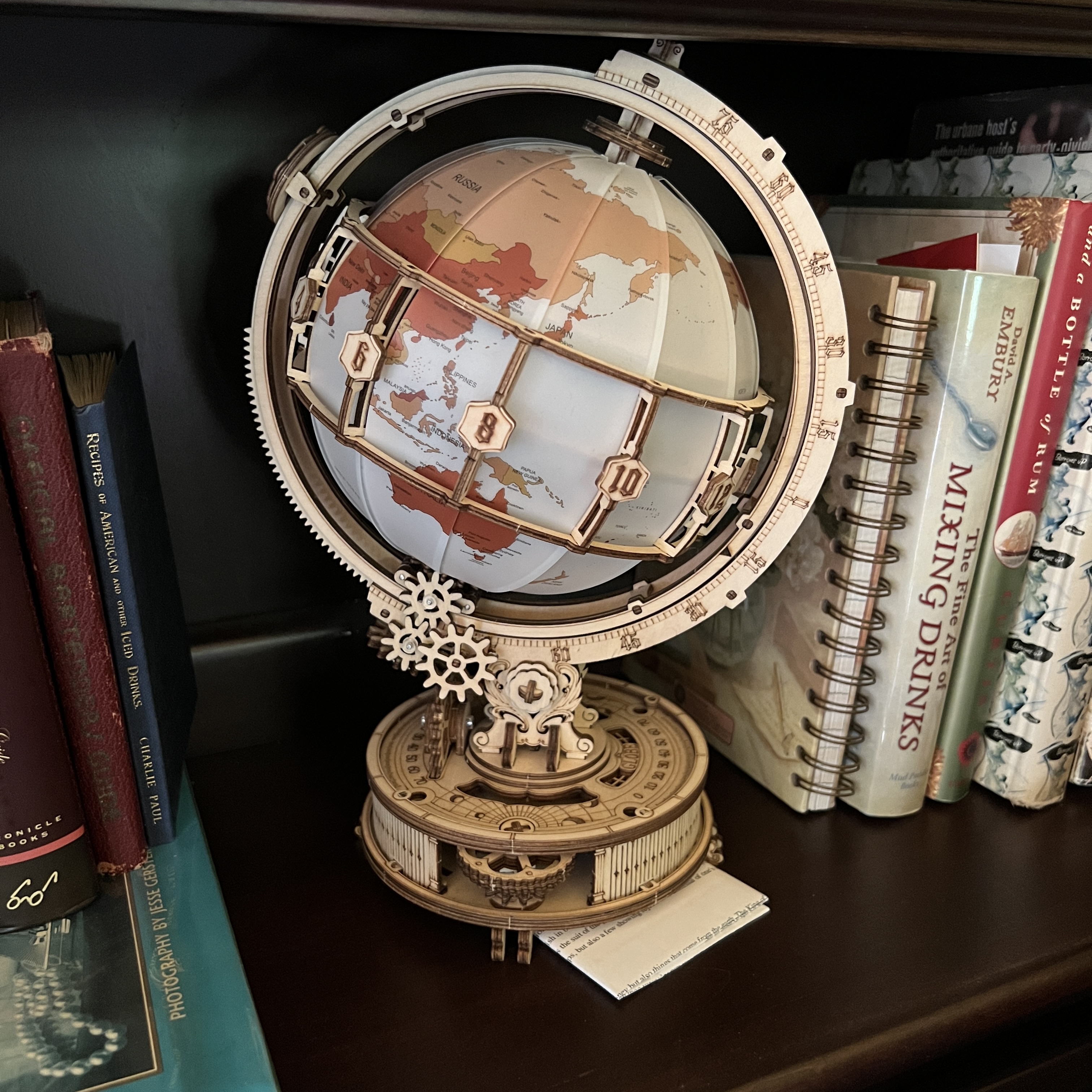
Under it were some final notes and the last two Harry Potter versions of the Major Arcana. That is supposed to be McGonagal as Judgment and Ginny as the World (well, for Harry)…
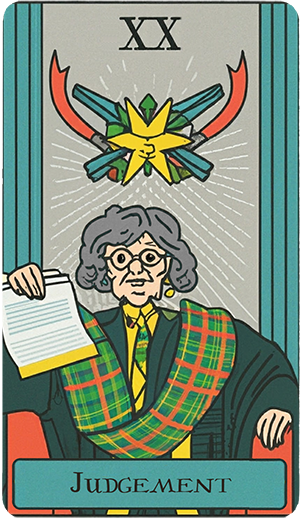
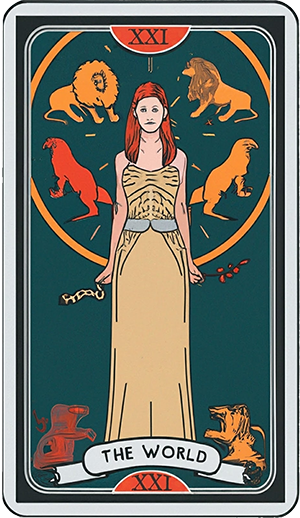
The Final Clue
Now came deciphering the final clue. She had to arrange the cards in order and by so doing, would be able to read the words between the cards:
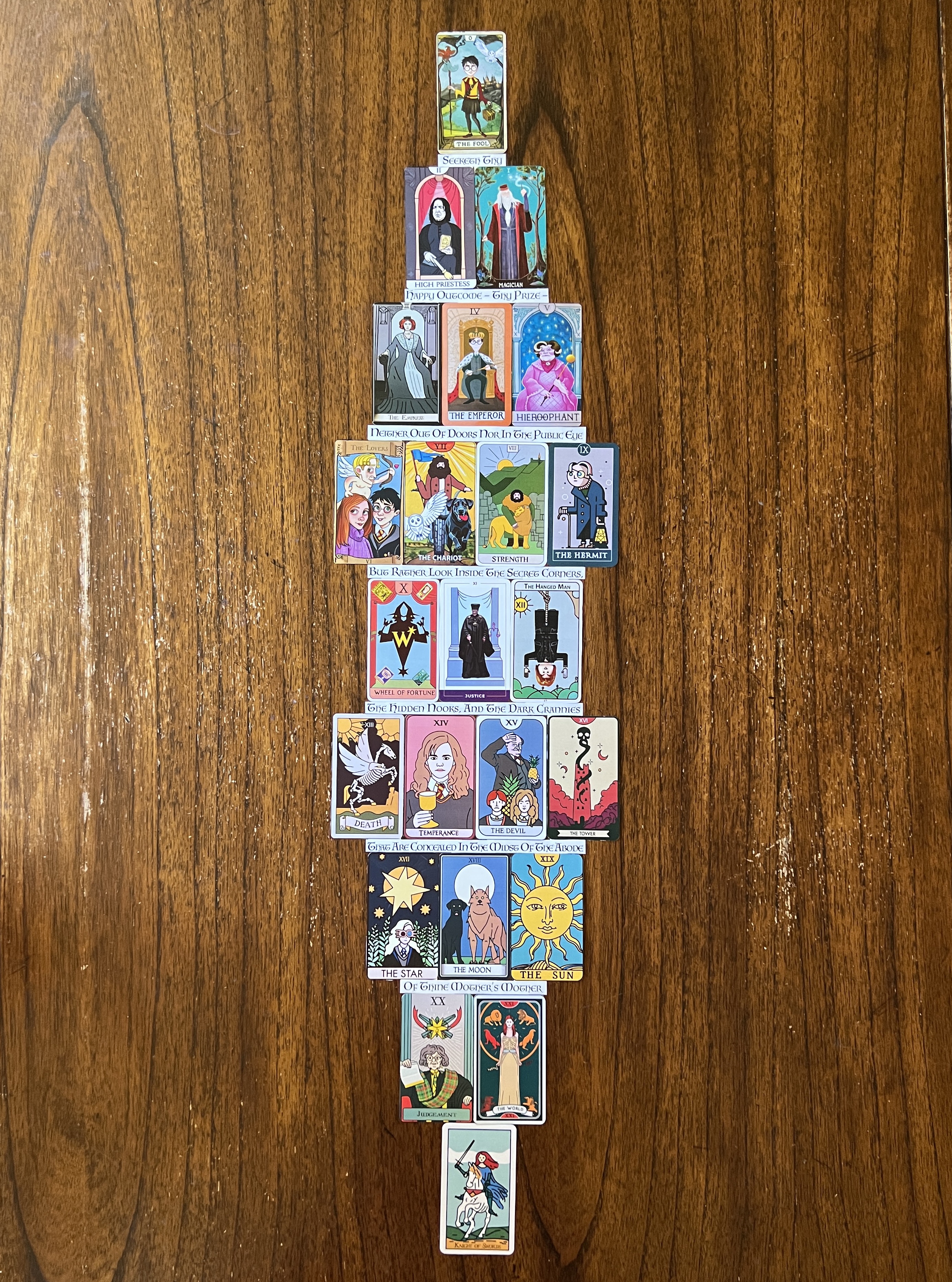
You can click the image to see a full-sized version or, for your convenience…
Happy Outcome–Thy Prize
Neither Out Of Doors Nor In The Public Eye
But Rather Look Inside The Secret Corners,
The Hidden Nooks, And The Dark Crannies
That Are Concealed In The Midst Of The Abode
Of Thine Mother’s Mother
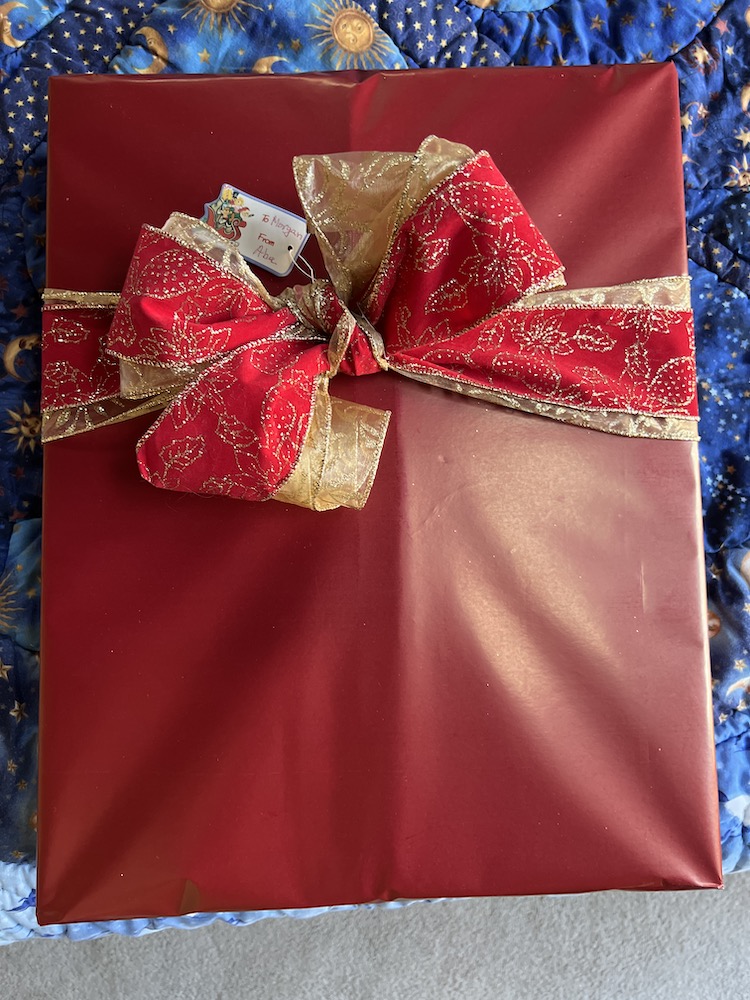
So one final clue, leading to searching her grandmother Sharlee’s place. And here, I confess I was looking forward to a prolonged search of all the hidden nooks and dark crannies that can be found in a person’s place. But no, she found it in the first place she looked, inside the closed TV cabinet, behind the TV…
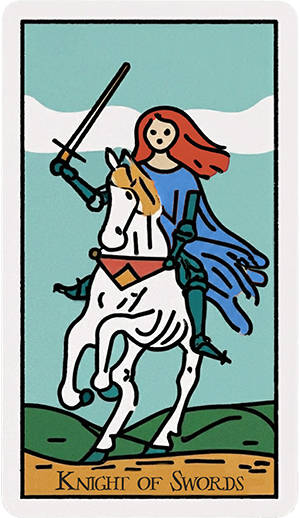
On the present was the Knight of Swords (aka, the Knave of Spades), but with my daughter as the knight.
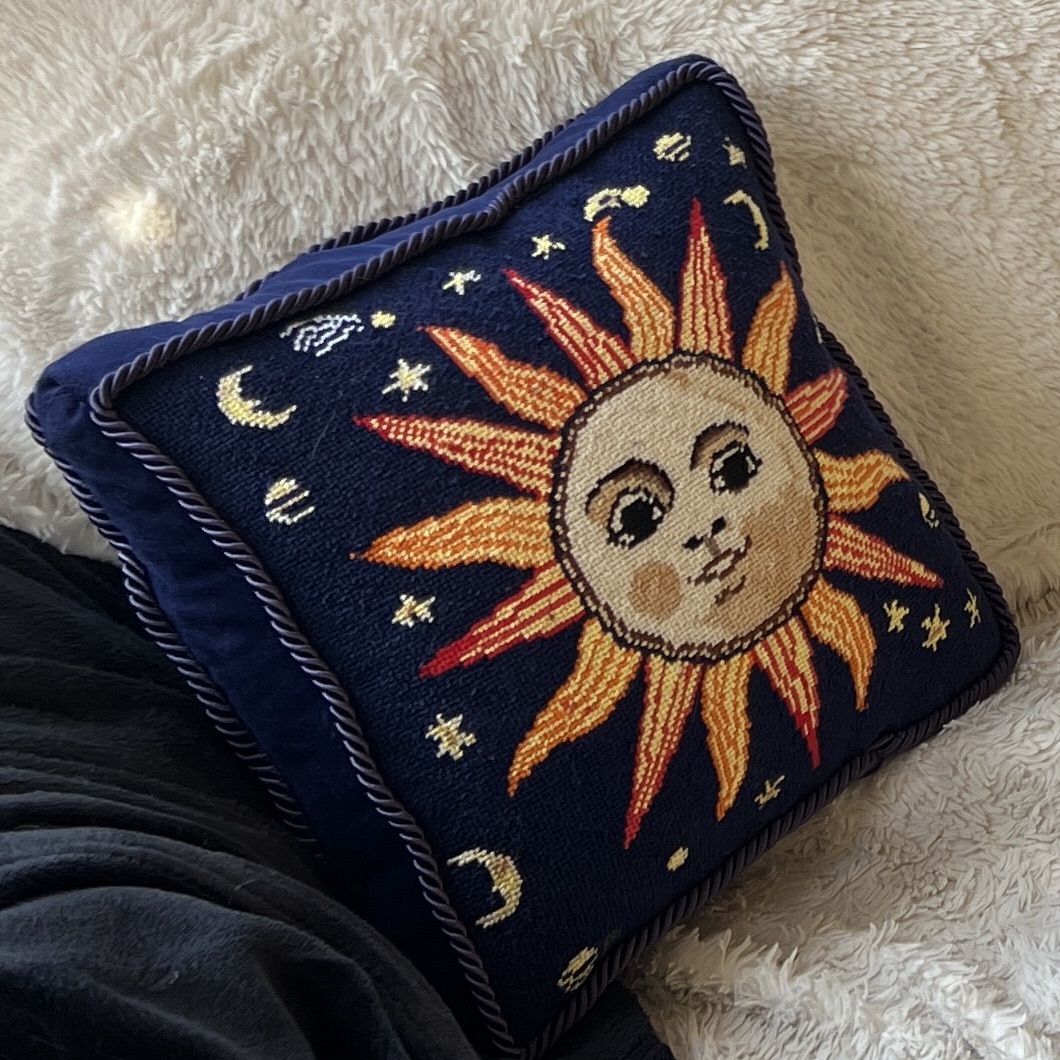
And inside, a pillow that Sharlee had embroidered once before - long before the fire. This was a recreation with some detective work on my part and my wife’s assistance - and a lot of work on Sharlee’s part - again! (So it was very appropriate for it to be found at Sharlee’s!)
Merry Christmas!
If you have gotten this far, congratulations and thanks. If you are wanting even more, you can check out the behind the scenes post that has the ‘original’ and ‘Harry Potter’ version side by side and how and why I chose the Harry Potter character for each Tarot card.
Footnotes
-
“Two of spades: conflict,’ she murmured, as she passed the place where Harry crouched, hidden. ‘Seven of spades: an ill omen. Ten of spades: violence. Knave of spades: a dark young man, possibly troubled, one who dislikes the questioner –’
She stopped dead, right on the other side of Harry’s statue.
‘Well, that can’t be right,’ she said, annoyed, and Harry heard her reshuffling vigorously as she set off again, leaving nothing but a whiff of cooking sherry behind her.” - Harry Potter and the Half-Blood Prince ↩ -
L’Imperatore/L’Empereur/The Emperor in Tarot - Sherryl E. Smith ↩
-
Il Papa/Le Pape/The Pope/The Hierophant in Tarot - Sherryl E. Smith ↩
-
A Complete Guide to the Tarot - Eden Gray ↩
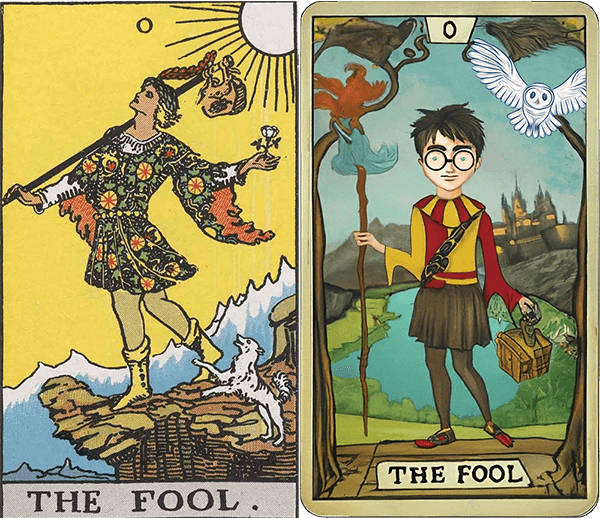
A card by card walkthrough of choosing each Harry Potter character